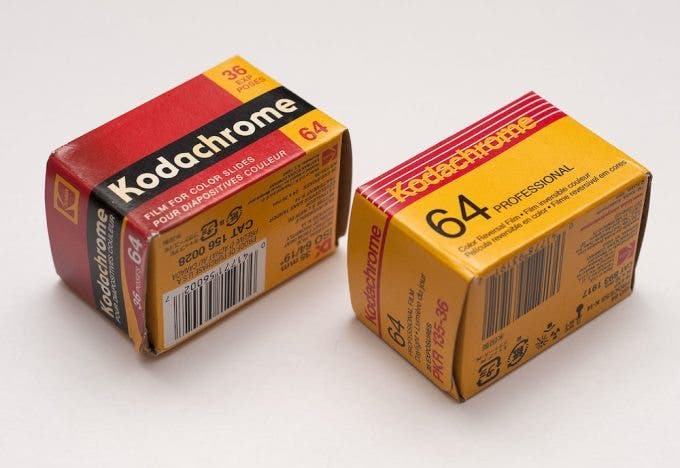
While colour photography had been around since the 1860s in some form or another, until the Eastman Kodak Company released its Kodachrome film in 1935, those wishing to capture a color photo had to deal with heavy glass plates, tripods, long exposures, and an exacting development procedure, all of which resulted in less than satisfactory pictures — dull, tinted images that were far from true to life. The Kodachrome process requires coating three emulsions, each sensitive to a different primary colour, on a single film base.Eastman Kodak created a colour reversal film called Kodachrome in 1935. It was one of the first successful colour materials, and it was utilised in both film and photography.
While many photographers were shocked, it was not a surprise when Eastman Kodak Company announced in 2009 that it would discontinue manufacture of Kodachrome. Steve McCurry, an award-winning photojournalist for National Geographic who is also one of my favourite photographers, best known for his haunting 1984 image (shot on Kodachrome) of a 12-year-old Afghan refugee girl with piercing green eyes, was one of the photographers who had long since moved on to digital imaging but was saddened by the demise of Kodachrome.
As far as the language of analog, I cannot talk much about the science behind it and the dark room processing method but I tried to my best experience to emulate it through Lightroom, digital behaves very differently and to be quite honest. My (probably superficial) take on Kodachrome was that it was highly saturated(mostly the reds) and high contrast; these two characteristics alone would be enough to create an illusion of sharpness, but it was inherently sharp and high resolution anyway.




 Allaboutphoto